About the National Industrial Court of Nigeria
A superior court of record with exclusive jurisdiction over labour, employment, trade unions, and industrial relations matters in Nigeria.

About the National Industrial Court of Nigeria hero image
Introductory Overview
The National Industrial Court of Nigeria is a constitutionally established superior court of record with nationwide jurisdiction, empowered to adjudicate matters relating to labour, employment, trade unions, industrial relations, and all related or incidental issues across the Federation. Recognised as a superior court of record by the Third Alteration Act to the Constitution of the Federal Republic of Nigeria, 2010, the Court is vested with exclusive jurisdiction in these specialised areas, thereby ensuring consistency, certainty, and uniform application of labour and employment laws throughout the country.
In the exercise of its constitutional mandate, the National Industrial Court of Nigeria serves as the apex judicial forum for resolving workplace and industrial disputes, including matters concerning workers' rights, employer obligations, collective bargaining, trade union activities, and the interpretation of international labour standards ratified by Nigeria. The Court's jurisdiction extends to both the public and private sectors, reinforcing its central role in regulating employment relations at all levels of governance and industry.
Through its decisions and judicial oversight, the National Industrial Court of Nigeria contributes significantly to the promotion of industrial harmony, the protection of fundamental labour rights, and the prevention of industrial unrest. By providing a specialised and authoritative forum for labour justice, the Court supports social stability, economic productivity, and sustainable national development in line with constitutional principles and global best practices.
Mission
The mission of the National Industrial Court of Nigeria is to serve as a specialised superior court of record dedicated to the fair, impartial and accessible adjudication of labour and employment disputes, in strict accordance with the constitution of the Federal Republic of Nigeria and the National Industrial Court Act, 2006. Anchored in its constitutional status and exclusive jurisdiction over matters relating to labour, employment, trade unions, industrial relations, workplace conditions, and related legal issues, the Court strives to uphold social justice, promote industrial harmony, and contribute to sustainable economic development by ensuring that labour laws are interpreted and applied consistently, equitably and with due regard for international best practices where appropriate.
Vision
To be a leading specialised court of record that delivers timely, impartial, and high-quality labour justice; fosters industrial harmony; upholds the rule of law in employment and industrial relations; and contributes to social stability and sustainable national development in Nigeria.
Constitutional and Legal Foundation
The authority of the National Industrial Court of Nigeria is firmly anchored in the Constitution of the Federal Republic of Nigeria and further strengthened by the Third Alteration to the Constitution, which expressly accords the Court constitutional status as a superior court of record and vests it with exclusive jurisdiction over labour, employment, trade unions, industrial relations, and related matters. This constitutional empowerment ensures that all disputes within its jurisdiction are determined by a specialized court with nationwide competence, thereby eliminating jurisdictional conflicts and promoting uniformity in the interpretation and application of labour laws across the Federation.
In addition to its constitutional foundation, the powers and operations of the Court are reinforced by the National Industrial Court Act, 2006, which provides the statutory framework for its establishment, composition, procedures, and enforcement mechanisms. The Act complements the constitutional provisions by enabling the Court to effectively discharge its mandate, including the protection of workers' rights, the regulation of employer-employee relations, and the resolution of industrial disputes in line with international best practices and applicable labour standards. Collectively, these legal instruments position the National Industrial Court of Nigeria as a critical institution in the Nigerian justice system, dedicated to promoting industrial peace, social justice, and the rule of law throughout the country.
Functions and Jurisdiction
Historical Background
- Established in 1976 to address industrial disputes
- Initially part of the Trade Disputes Decree, transitions and to a fulfill edge court as recognized by the 1999 Constitution
- Elevated to a superior court of record by the Third Alteration Act of 2010
- Consistent role in improving labor dispute resolution across Nigeria
Key Milestone in development
- 1992 – Re-enactment under the Trade Disputes (Amendment) Decree No. 47
- 2006 – Enactment of the National Industrial Court Act, 2006
- 2010 – Third Alteration Act to the Constitution of the Federal Republic of Nigeria (elevated to the status of a superior court of record)
- 2011 – Exclusive Jurisdiction over Labour and Employment Matters
Leadership of the Court
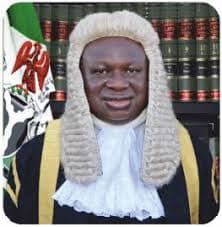
The President of the National Industrial Court of Nigeria is the Chief Judicial Officer and administrative head of the Court, responsible for providing judicial leadership and strategic direction in the adjudication of labor, employment, and industrial relations matters nationwide. The President oversees the effective administration of the Court, assigns cases, supervises judges and court divisions, issues practice directions to enhance efficiency, and ensures compliance with the Constitution, the National Industrial Court Act, and other applicable laws. In this capacity.
The President safeguards the independence, integrity, and professionalism of the Court, promotes timely and fair delivery of labor justice, and represents the Court in its relations with other arms of government, the legal profession, and relevant national and international institutions.